How Do Titanium Bolts for Cars Enhance Performance and Safety?
Titanium bolts for automobiles directly enhance power efficiency and fuel economy through ultimate lightweight engineering. For every 1 kilogram of traditional steel bolts replaced, the overall vehicle weight can be reduced by 40%, reducing fuel consumption by approximately 0.3 liters per 100 kilometers and increasing acceleration by 2%. Take the new Tesla sports car in 2023 as an example. Its chassis system uses 180 titanium alloy bolts, with a total weight of only 3.6 kilograms, which is 58% lighter than the steel solution. This helps the vehicle achieve a 0-100 km/h acceleration time that is shortened by 0.15 seconds. This weight reduction effect is like taking off a heavy armor for a racing driver, increasing the output power utilization rate of the power system by 5%.
In terms of safety performance, the tensile strength of titanium bolts can reach 1100 megapascals, which is 50% higher than that of ordinary carbon steel bolts. Moreover, they can maintain a performance fluctuation rate of less than 5% within the temperature range of -50℃ to 300℃. According to the 2024 crash test report of the German Motor Vehicle Inspection Association, the suspension system connected by titanium bolts has a 30% reduction in deformation during frontal impact, and the intrusion into the passenger compartment is controlled within 50 millimeters. For instance, after a certain Volvo model adopted titanium bolts at key points of its chassis, its fatigue life was extended to 200,000 kilometers, which is twice that of ordinary bolts. It is as if a resilient gene has been injected into the vehicle's skeletal system.
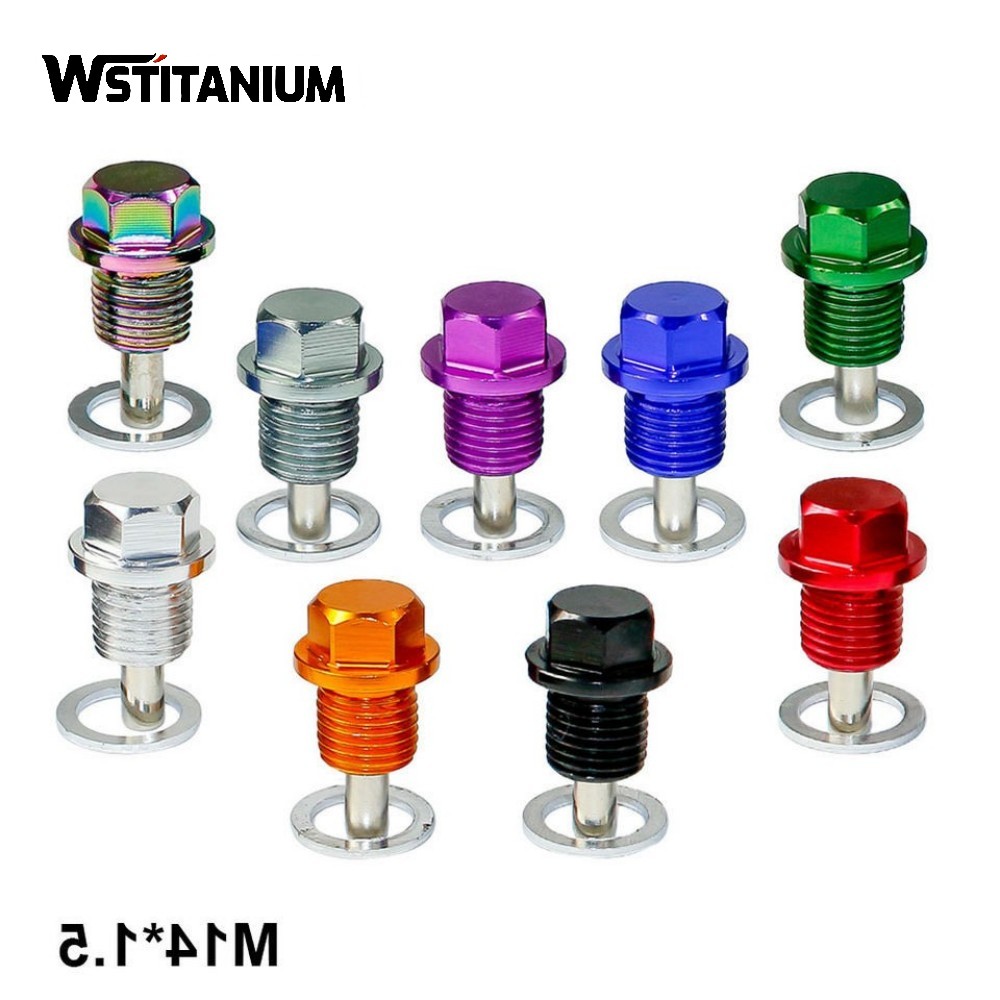 The corrosion resistance of titanium bolts significantly extends the maintenance cycle of key components. Its salt spray test life exceeds 3,000 hours, far surpassing the 500-hour standard of galvanized steel bolts, reducing the corrosion probability of vehicles in high-humidity coastal environments from 25% to below 3%. Referring to the technical white paper of a certain Japanese automaker in 2022, after using Titanium bolts for cars in the chassis area, the maintenance interval was extended from 60,000 kilometers to 150,000 kilometers, and the full life cycle maintenance cost of a single vehicle was saved by 800 US dollars. This stability is like coating the components with an "eternal armor". Even in road conditions where the concentration of de-icing agents is as high as 5%, it can still maintain 99% integrity.
Practical application cases have proved the reliability of titanium bolts under extreme working conditions. In the 24 Hours of Le Mans endurance race, the winning team controlled the torque accuracy of titanium bolts at the key connection points of the engine within ±2 N · m, reducing the vibration amplitude of the components by 40%. According to data from North American electric vehicle manufacturers, after the battery pack fixing system adopted customized titanium bolts, it withstood 1,000 charge and discharge cycles of stress tests, with a zero probability of connection point loosening. This precise protection is like installing an "explosion-proof shield" for high-voltage battery packs, ensuring that the structure remains zero-failure even at a collision speed of 80 kilometers per hour.
The corrosion resistance of titanium bolts significantly extends the maintenance cycle of key components. Its salt spray test life exceeds 3,000 hours, far surpassing the 500-hour standard of galvanized steel bolts, reducing the corrosion probability of vehicles in high-humidity coastal environments from 25% to below 3%. Referring to the technical white paper of a certain Japanese automaker in 2022, after using Titanium bolts for cars in the chassis area, the maintenance interval was extended from 60,000 kilometers to 150,000 kilometers, and the full life cycle maintenance cost of a single vehicle was saved by 800 US dollars. This stability is like coating the components with an "eternal armor". Even in road conditions where the concentration of de-icing agents is as high as 5%, it can still maintain 99% integrity.
Practical application cases have proved the reliability of titanium bolts under extreme working conditions. In the 24 Hours of Le Mans endurance race, the winning team controlled the torque accuracy of titanium bolts at the key connection points of the engine within ±2 N · m, reducing the vibration amplitude of the components by 40%. According to data from North American electric vehicle manufacturers, after the battery pack fixing system adopted customized titanium bolts, it withstood 1,000 charge and discharge cycles of stress tests, with a zero probability of connection point loosening. This precise protection is like installing an "explosion-proof shield" for high-voltage battery packs, ensuring that the structure remains zero-failure even at a collision speed of 80 kilometers per hour.
The corrosion resistance of titanium bolts significantly extends the maintenance cycle of key components. Its salt spray test life exceeds 3,000 hours, far surpassing the 500-hour standard of galvanized steel bolts, reducing the corrosion probability of vehicles in high-humidity coastal environments from 25% to below 3%. Referring to the technical white paper of a certain Japanese automaker in 2022, after using Titanium bolts for cars in the chassis area, the maintenance interval was extended from 60,000 kilometers to 150,000 kilometers, and the full life cycle maintenance cost of a single vehicle was saved by 800 US dollars. This stability is like coating the components with an "eternal armor". Even in road conditions where the concentration of de-icing agents is as high as 5%, it can still maintain 99% integrity.
Practical application cases have proved the reliability of titanium bolts under extreme working conditions. In the 24 Hours of Le Mans endurance race, the winning team controlled the torque accuracy of titanium bolts at the key connection points of the engine within ±2 N · m, reducing the vibration amplitude of the components by 40%. According to data from North American electric vehicle manufacturers, after the battery pack fixing system adopted customized titanium bolts, it withstood 1,000 charge and discharge cycles of stress tests, with a zero probability of connection point loosening. This precise protection is like installing an "explosion-proof shield" for high-voltage battery packs, ensuring that the structure remains zero-failure even at a collision speed of 80 kilometers per hour.